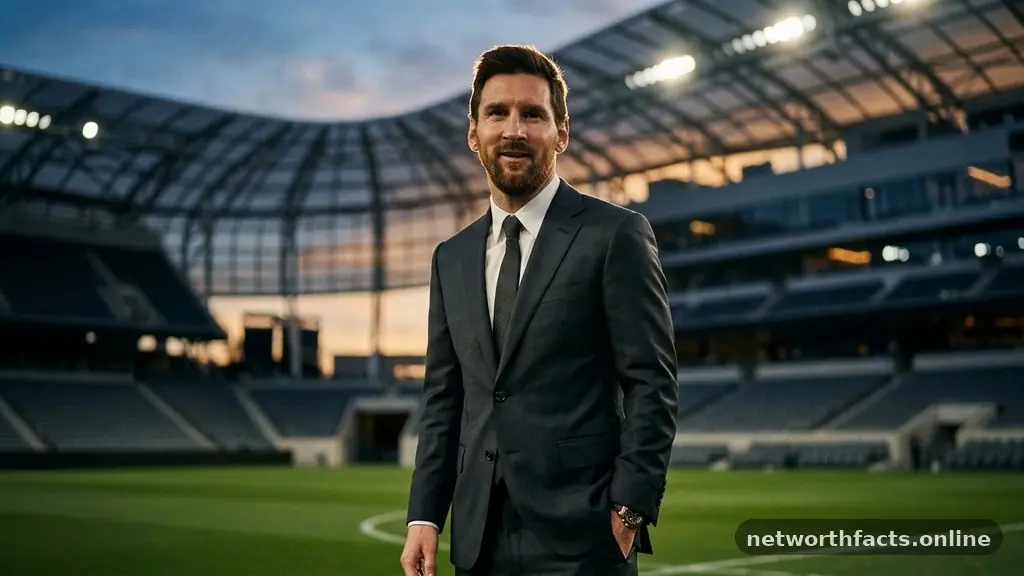
Lionel Messi Net Worth, Salary, and Business Ventures
The numbers behind Lionel Messi’s net worth, salary, and business ventures reveal a fortune built from more than football wages. His Inter Miami CF contract, long-running endorsement deals, hotel interests, and Messi Brand all contribute to a financial picture that is unusually broad for an athlete.
For anyone researching Lionel Messi Net Worth, Salary, and Business Ventures, the biggest challenge is separating reported figures from speculation. There is no public personal balance sheet, so estimates differ, but the available evidence still shows how Messi turned success with FC Barcelona, Paris Saint-Germain, Argentina, and Inter Miami into several durable income streams.
How Much Is Lionel Messi Worth?
Public estimates commonly place Lionel Messi’s net worth somewhere between $600 million and $900 million, although no figure has been officially confirmed by Messi or his representatives. The range is wide because private investments, taxes, property values, contract bonuses, and business ownership stakes are not fully disclosed.
A figure near $850 million is often cited by celebrity-finance publications, while other estimates are more conservative. These numbers should be treated as informed approximations rather than audited facts. Net worth means assets minus liabilities, not the total amount a player has earned during his career.
Messi’s career earnings are much easier to establish in broad terms. Forbes has repeatedly ranked him among the world’s highest-paid athletes, combining football compensation with commercial income. In its 2024 estimate, Forbes placed Messi’s annual earnings at approximately $135 million, including salary, bonuses, and off-field income.
His fortune has accumulated over more than two decades. Messi joined Barcelona’s senior team in 2004, spent the bulk of his peak years there, moved to Paris Saint-Germain in 2021, and joined Inter Miami in 2023 after winning the 2022 FIFA World Cup with Argentina.
The key point is that his wealth is not based on one paycheque. It rests on several layers:
- Football compensation: club salary, signing payments, performance incentives, and other contract benefits.
- Sponsorship income: long-term relationships with Adidas, Mastercard, Pepsi, and other international brands.
- Property and hospitality: hotel investments connected with the MIM Hotels portfolio.
- Brand ownership: the Messi Brand and related merchandise activity, including The Messi Store.
- Commercial partnerships: deals involving Inter Miami, MLS, Apple, and Hard Rock International.
That mix explains why a simple “salary multiplied by years” calculation misses much of the financial story. Messi earns as a footballer, but he also earns from being one of the most recognisable names in global sport.
Messi’s Football Salary Over Time
Messi’s wages changed dramatically as his sporting reputation grew. At Barcelona, his contract renewals reflected his status as the club’s central player and one of football’s biggest commercial attractions. Exact annual figures varied according to bonuses, image rights, taxes, and whether reports described gross or net pay.
By the end of his Barcelona career, published reports described a package worth tens of millions of euros per year. A widely reported 2017 renewal was valued at more than €100 million annually before taxes when salary, bonuses, and other elements were included, though reported totals differ considerably by source.
Messi’s move to Paris Saint-Germain in 2021 created another highly publicised contract. Reports generally placed his annual salary at roughly €35 million net per season, with bonuses and commercial considerations potentially adding to the total. Net salary figures are particularly difficult to compare because tax treatment differs between countries.
His Inter Miami agreement is structured differently from the traditional European model. The MLS contract includes a reported base salary and guaranteed compensation, while Messi’s overall commercial arrangement also involves league-wide partnerships and benefits connected to the club’s growth.
| Career stage | Reported financial picture | Why comparisons are difficult |
|---|---|---|
| FC Barcelona | Final-year packages were reported in the tens of millions of euros, with bonuses and other benefits | Sources often combined gross salary, bonuses, and image-rights payments |
| Paris Saint-Germain | Reports commonly cited about €35 million net per season before additional incentives | Net figures depend on French tax treatment and contract bonuses |
| Inter Miami CF | MLS Players Association disclosures have reported guaranteed compensation above $20 million | The wider arrangement includes commercial and partnership value beyond club salary |
| Argentina | National-team compensation is separate from club contracts | Match fees and bonuses are not generally disclosed in a complete public schedule |
The Inter Miami arrangement is especially important because Messi’s arrival helped raise the value of the entire MLS ecosystem. Apple’s MLS Season Pass partnership, Adidas’ relationship with the league, and ticket demand all became part of the commercial conversation surrounding his move.
The MLS Players Association salary guide is a useful reference for comparing publicly listed player compensation, although it does not reveal every commercial benefit in Messi’s wider arrangement.
What Inter Miami Adds to His Earnings
Messi signed with Inter Miami in 2023 after leaving Paris Saint-Germain. His arrival was not simply a football transfer; it was a business event involving the club, Major League Soccer, Apple, Adidas, and a rapidly expanding international audience.
MLS Players Association figures have listed Messi’s guaranteed compensation at roughly $20.4 million in recent salary disclosures. That number is meaningful, but it should not be mistaken for his total compensation from the Miami move.
Reports about the agreement have described additional commercial elements tied to league growth. These have included a possible share of new MLS expansion activity, a relationship with Apple connected to subscriptions, and Adidas-related benefits. The precise terms have not been published in a complete, independently verified contract.
Messi’s value to Inter Miami can also be seen in practical indicators. The club’s global social-media following surged after his signing, match attendance became a major attraction, and merchandise demand increased sharply. Away fixtures featuring Miami often became among the most anticipated games on the schedule.
There is a difference between revenue created by Messi and money paid directly to Messi. Inter Miami receives ticket income, sponsorship payments, broadcast exposure, and merchandise revenue, while Messi’s personal compensation depends on the terms of his contract and commercial agreements.
His presence also changed the club’s negotiating position. Inter Miami could present itself to sponsors as a global entertainment property rather than only a young MLS franchise. That creates indirect value even when a particular sponsorship cheque does not go directly into Messi’s personal accounts.
The arrangement illustrates why salary rankings can be misleading. A player may appear lower on a basic club-pay list while receiving considerable value through commercial rights, equity-like incentives, or league partnerships. Messi’s Miami deal is one of the clearest examples of that modern sports-business model.
Adidas and His Endorsement Portfolio
Endorsement deals are a major part of Messi’s annual income. His relationship with Adidas is the most important long-term example, stretching back to 2006 and developing into a signature product business rather than a standard boot contract.
Adidas has released Messi-branded football boots, clothing, training products, and collections connected with important career moments. The Lionel Messi name appears across product lines aimed at both serious players and fans who want branded apparel.
Reports have described Messi’s Adidas deal as one of the most valuable individual athlete agreements in football. Some outlets have reported a lifetime arrangement, but the complete legal terms and exact annual payments are not publicly available. It is safer to say the partnership provides substantial recurring sponsorship income than to present an unverified fixed amount.
Messi has also worked with brands including Pepsi, Mastercard, Gatorade, Lay’s, Budweiser, and Saudi tourism authorities at different points in his career. Partnerships change over time, and not every reported relationship remains active, so lists of sponsors should be checked against current announcements.
His commercial appeal comes from several distinct audiences. Football fans connect him with performance, families recognise him as a familiar public figure, and global brands value his reach in Latin America, Europe, Asia, North America, and the Middle East.
- Adidas: football footwear, apparel, signature collections, and long-term athlete branding.
- Pepsi and Lay’s: mass-market advertising campaigns with broad international distribution.
- Mastercard: financial-services campaigns linked to global football audiences.
- Hard Rock International: hospitality and entertainment partnerships using Messi-related branding.
- Apple and MLS-related activity: commercial exposure connected with the league’s media growth after his arrival in Miami.
Not every endorsement payment is a simple cash fee. Contracts may include appearance obligations, licensing rights, product royalties, social-media deliverables, or restrictions on working with competing brands. That is why published annual earnings estimates can differ even when they cover the same twelve-month period.
The Messi Brand and The Messi Store
The Messi Brand gives the footballer more control over how his name is used in consumer products. The brand launched with MGO, a company associated with Messi’s management and business activities, and has been used across clothing and lifestyle merchandise.
The Messi Store sells products built around his identity rather than a single club. That distinction matters because Messi has played for FC Barcelona, Paris Saint-Germain, and Inter Miami, while a broader personal brand can continue across transfers and national-team appearances.
Merchandise businesses earn money through several routes. A brand may collect wholesale or licensing revenue, sell directly to consumers, collaborate with retailers, and use limited releases to create demand around major events such as a World Cup or a new club move.
The online store also provides valuable customer data and direct contact with fans. A traditional endorsement places a player inside another company’s campaign, but a direct-to-consumer operation can shape product selection, pricing, presentation, and repeat purchasing.
That does not mean every sale becomes profit for Messi. Manufacturing, logistics, customer service, returns, marketing, payment processing, and retail margins all reduce gross revenue. The important point is that the business creates a commercial asset linked to his name rather than relying only on appearances or advertising days.
Product categories connected with The Messi Store have included casual clothing, accessories, and items for children. The strongest advantage is consistency: fans can buy Messi-related goods whether he is playing in Miami, representing Argentina, or appearing in a historic football retrospective.
His brand strategy also benefits from scarcity and timing. A new collection tied to a major tournament or career milestone can attract attention without requiring Messi to launch an entirely new company. The name itself carries much of the recognition that a young fashion label would spend years building.
MIM Hotels and Hospitality Investments
Messi’s property interests extend beyond houses and luxury real estate. Through a partnership with Majestic Hotel Group, he became involved with MIM Hotels, a hospitality business associated with hotels in destinations including Sitges, Ibiza, Mallorca, Baqueira, and Andorra.
The first widely reported MIM property opened in Sitges near Barcelona in 2017. Additional acquisitions and openings expanded the portfolio, giving the brand a presence in resorts and tourism markets rather than tying it to one city.
Hospitality can be an attractive investment for a globally known athlete because the business uses both physical assets and personal branding. A hotel produces revenue from rooms, restaurants, events, and ancillary services, while the Messi association can generate media attention that a conventional property may have to buy through advertising.
Still, owning or backing hotels is not the same as collecting room revenue personally. Hotel structures can involve operating partners, lenders, holding companies, management contracts, and minority ownership stakes. Public reports do not provide a complete breakdown of Messi’s percentage ownership in every MIM property.
The business also carries real exposure to tourism cycles. Occupancy can fall because of economic downturns, travel restrictions, seasonality, or local competition. A famous name helps with awareness, but it does not eliminate the costs of staffing, maintenance, renovations, utilities, and regulatory compliance.
MIM Hotels shows a different side of Messi’s financial planning. The Messi Brand monetises his image through products, while hotels place capital into long-lived physical businesses. A successful hospitality portfolio can create income beyond his playing career, although its returns are less immediate and less transparent than an endorsement fee.
For readers evaluating his net worth, hotel holdings also highlight why estimates should be cautious. Property values can change significantly, and a headline number may describe the value of an entire hotel rather than Messi’s personal share after debt and partners are accounted for.
Hard Rock International and Other Ventures
Messi’s relationship with Hard Rock International has connected his brand with hospitality, entertainment, and fan experiences. The partnership has included Messi-branded merchandise and collaborations designed to place his image inside a major global leisure company.
Hard Rock’s business spans hotels, restaurants, casinos, music venues, and branded merchandise. A partnership in that environment can involve advertising, licensing, product creation, and special experiences, but the exact financial value of the Messi agreement has not been publicly disclosed.
One notable example has been Messi-branded sportswear and merchandise sold through Hard Rock channels. This kind of arrangement differs from a basic sports advertisement because the athlete’s name can remain attached to products and locations after a campaign ends.
Messi’s wider business interests have also included real estate and investments managed through entities connected to his family and advisers. Some property purchases have been reported in Spain and elsewhere, but individual values, financing arrangements, and ownership percentages are not always available from reliable public records.
There is a useful distinction between a confirmed venture and a rumour. A company listing, trademark, launch announcement, or named commercial partner offers stronger evidence than a website claiming that Messi owns a particular chain or has invested a specific amount.
His ventures generally fit three themes:
- Licensing: allowing companies to use his name, image, signature, or personal story on approved products.
- Hospitality: participating in hotels and entertainment partnerships that can operate after his playing days.
- Direct commerce: selling clothing and lifestyle products through Messi-controlled or Messi-branded channels.
That combination gives Messi several ways to earn without adding more matches to his schedule. It also explains why his commercial value may remain high after retirement, provided the brand stays carefully managed and connected with qualities fans already associate with him.
Why Net-Worth Estimates Vary
Celebrity net-worth figures often look precise even when the underlying evidence is not. Messi’s case is particularly complicated because his contracts cross Spain, France, the United States, and international football, each with different tax rules and reporting practices.
One source may count gross salary while another counts after-tax pay. A third may add endorsement income, property value, and business interests without subtracting debt or business expenses. Those methods can produce dramatically different totals while appearing to describe the same person.
Contract bonuses create another problem. Winning a title, reaching a certain number of appearances, or securing an individual award can trigger payments that are not visible in a standard salary figure. Some reports also bundle signing bonuses into an annual number, while others spread them across the contract term.
Business ownership is even harder to measure. If Messi has an interest in a hotel company, the relevant number is not automatically the hotel’s headline valuation. Analysts would need to know his percentage, the company’s debt, taxes, operating performance, and whether the valuation reflects a real sale or only an internal estimate.
Readers should therefore look for transparent wording. “Estimated net worth” signals uncertainty, while “reported guaranteed compensation” refers to a narrower and more verifiable figure. Neither should be presented as an official personal statement unless Messi’s representatives have actually released one.
| Figure type | What it usually includes | What it may leave out |
|---|---|---|
| Base salary | Guaranteed club pay before or after taxes, depending on the source | Bonuses, endorsements, and commercial rights |
| Annual earnings | Salary plus estimated sponsorship and appearance income | Private investments, taxes, and business expenses |
| Net worth | Estimated assets minus estimated liabilities | Exact private holdings and debt balances |
| Business valuation | Possible value of a brand, company, or property portfolio | Messi’s actual ownership percentage and liquidation value |
The most responsible conclusion is not that one website has found the exact answer. It is that Messi is almost certainly a billionaire-level commercial force in football, while his personal net worth remains an estimate rather than a public accounting statement.
Frequently Asked Questions
What is Lionel Messi’s estimated net worth?
Published estimates commonly place Lionel Messi’s net worth between $600 million and $900 million, with some celebrity-finance outlets using a figure near $850 million. No official personal balance sheet has been released, so the amount should be treated as an estimate affected by private assets, taxes, debt, and business valuations.
How much does Messi earn at Inter Miami?
MLS Players Association disclosures have placed Messi’s guaranteed compensation at roughly $20.4 million in recent salary data. His broader Inter Miami arrangement may be worth more because it reportedly includes commercial benefits linked to MLS, Apple, Adidas, and other partnerships, but the complete terms are not public.
Does Messi own The Messi Store?
The Messi Store operates as part of the commercial world surrounding the Messi Brand and his management business. The exact corporate ownership and profit-sharing structure is not fully disclosed, so it is more accurate to describe it as a Messi-branded direct-to-consumer venture than to claim a specific personal ownership percentage.
What hotels are connected to Messi?
Messi has been associated with MIM Hotels, a hospitality portfolio developed with Majestic Hotel Group. Properties have been linked with destinations such as Sitges, Ibiza, Mallorca, Baqueira, and Andorra. Reports do not provide a complete public breakdown of Messi’s stake in every individual property.
Is Messi a billionaire?
Some informal online claims describe Messi as a billionaire, but widely published estimates generally place his net worth below $1 billion. He has earned more than $1 billion in career income before taxes according to estimates from major financial publications, but total career earnings and current net worth are different measurements.
What Messi’s Financial Picture Shows
Lionel Messi Net Worth, Salary, and Business Ventures cannot be reduced to one exact number. His football contracts supplied the foundation, while Adidas, other endorsement deals, The Messi Store, MIM Hotels, and partnerships such as Hard Rock International broadened the income base.
The practical takeaway is to treat net-worth headlines as estimates and focus on the underlying structure. Messi’s lasting financial strength comes from combining elite sporting income with businesses and licensing relationships that can continue generating value after his playing career ends.