Rihanna Net Worth, Music Career, and Business Empire
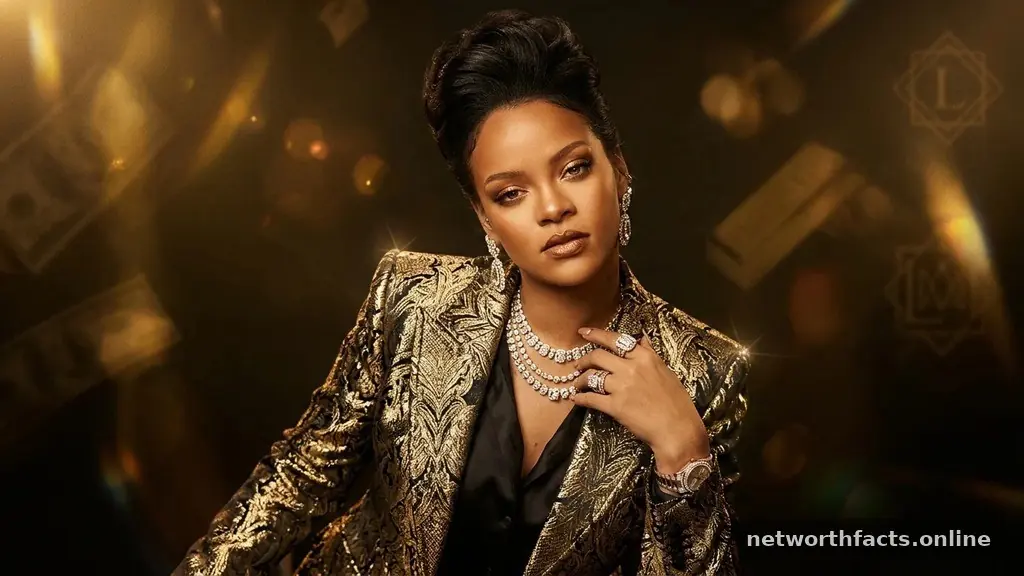
Rihanna’s wealth comes from far more than hit singles and concert income. The story behind Rihanna Net Worth, Music Career, and Business Empire shows how a Barbados-born singer turned global fame into ownership stakes, consumer brands, and long-term influence.
Public estimates place Rihanna’s net worth at about $1.4 billion, although private-company valuations and changing market conditions mean the figure can move. Her music catalogue created the platform, while Fenty Beauty, Savage X Fenty, fashion partnerships, property, and business ventures built much of the fortune attached to her name.
Rihanna’s Estimated Net Worth
Rihanna’s estimated net worth is approximately $1.4 billion, according to widely reported estimates from outlets including Forbes. That number should be treated as an estimate rather than a bank statement because Rihanna’s most valuable holdings are connected to private companies whose exact financial details are not fully public.
The largest share of her fortune is generally linked to Fenty Beauty, the cosmetics business launched with LVMH’s beauty division in 2017. Rihanna has also held an ownership stake in Savage X Fenty, the lingerie brand created in partnership with TechStyle Fashion Group, although the size and current value of that stake have not always been publicly disclosed.
Her wealth is therefore different from the annual income of a touring singer. A performer might earn millions from an album, endorsements, or a tour, but an owner can benefit from the rising value of a company over many years. Rihanna’s net worth reflects that distinction: music supplied visibility and cash flow, while equity supplied the possibility of much larger long-term gains.
Forbes recognised Rihanna as a billionaire in 2021. Its reporting attributed the status mainly to the value of Fenty Beauty, rather than to music royalties alone. That milestone also changed how the public discussed celebrity wealth, because it highlighted the difference between being highly paid and owning a meaningful share of a scalable consumer company.
| Wealth source | What is publicly known | Why it matters |
|---|---|---|
| Music and royalties | Albums, singles, streaming, publishing, licensing, and performance income | Created global recognition and recurring catalogue revenue |
| Fenty Beauty | Rihanna co-created the brand with LVMH in 2017 | Widely considered the largest contributor to her billionaire valuation |
| Savage X Fenty | Lingerie company launched in 2018 with outside investment | Added ownership in a fast-growing direct-to-consumer brand |
| Fashion and partnerships | Fenty fashion house, Puma collaborations, Dior, and other deals | Expanded her commercial identity beyond entertainment |
| Property and personal assets | High-value real estate and other privately held assets | Can support wealth, although individual values fluctuate |
It is also important not to confuse revenue with personal wealth. A company can generate hundreds of millions in sales without giving its founder the same amount in income, and a valuation can fall without the owner selling anything. The safest description is that Rihanna is a billionaire by estimated net worth, with the precise figure dependent on private valuations, ownership percentages, taxes, and liabilities.
How Her Music Career Created the Foundation
Rihanna’s music career began after she was discovered in Barbados and brought to the attention of producer Evan Rogers. She signed with Def Jam Recordings in 2005, when Jay-Z was serving as the label’s president, and released her debut album, Music of the Sun, that same year.
The early single “Pon de Replay” introduced her as a distinctive new voice with Caribbean influence. Her second album, A Girl like Me, followed in 2006 and produced “SOS,” Rihanna’s first number-one single on the US Billboard Hot 100.
Her commercial acceleration came with Good Girl Gone Bad in 2007. The album produced “Umbrella,” a major international hit featuring Jay-Z, and established Rihanna as an artist who could move from dancehall and pop influences into a broader mainstream sound.
From there, her release schedule became unusually productive. Rated R arrived in 2009, followed by Loud in 2010, Talk That Talk in 2011, and Unapologetic in 2012. The run included hit singles such as “Only Girl (In the World),” “What’s My Name?,” “We Found Love,” “Diamonds,” and “Stay.”
Her eighth studio album, Anti, was released in 2016 and included “Work,” “Needed Me,” and “Love on the Brain.” It became a major streaming-era success and later earned multi-platinum recognition, showing that Rihanna could remain commercially powerful even as her release pattern became less frequent.
Rihanna has won nine Grammy Awards, along with numerous Billboard Music Awards, American Music Awards, and other honours. Awards alone do not determine net worth, but they help explain why her name could attract customers to an unfamiliar product category.
Music also gave Rihanna several revenue channels rather than one paycheque. These include recorded-music royalties, publishing income, streaming, sync licensing, touring, merchandise, collaborations, and performance fees. Exact earnings for each category are private, and public estimates often differ because contracts and royalty splits are not fully visible.
Her decision to reduce her recording output after Anti did not erase the value of the catalogue. Familiar songs continue to generate streams and licensing opportunities, while the earlier albums keep her connected to listeners across multiple generations. The catalogue functions as both creative work and an enduring commercial asset.
Fenty Beauty Changed the Cosmetics Market
Fenty Beauty launched in September 2017 through a partnership between Rihanna and LVMH’s Kendo division. Its first foundation release became known for offering 40 shades, a range that was later expanded as the brand responded to customers with additional complexions.
The significance was not simply the number of shades. Many mainstream beauty companies had historically offered narrower foundation ranges, leaving customers with darker skin tones underserved. Fenty Beauty placed inclusive shade development at the centre of its product launch and marketing rather than treating it as a small extension of a standard line.
The brand’s debut also showed how Rihanna’s celebrity could work differently from a traditional endorsement. She was not merely appearing in an advertisement for someone else’s cosmetics product; her name, image, product direction, and cultural credibility were tied to the brand itself.
Fenty Beauty sells foundation, concealer, primer, highlighter, lipstick, blush, bronzer, and other cosmetics through its own channels and retail partners. Its products have been carried by major retailers including Sephora, giving the company access to shoppers who may never have purchased an album or attended a concert.
Public reports have described Fenty Beauty as producing very strong sales soon after launch. In 2018, Forbes reported that the brand generated substantial revenue in its first full year, while LVMH later described Fenty Beauty as a major success within its portfolio. Exact annual sales and profits can vary by reporting period and are not equivalent to Rihanna’s personal income.
The partnership structure matters. LVMH brought manufacturing, distribution, retail relationships, and experience operating luxury and beauty brands, while Rihanna supplied creative direction, audience trust, and cultural relevance. That combination reduced the need for Rihanna to build every part of the supply chain herself.
Fenty Beauty also created a repeat-purchase model. A hit song may be streamed for years, but foundation, lip products, and skincare items can be purchased again and again if customers like the formula. Recurring consumption is one reason a cosmetics business can become more valuable than a one-time celebrity campaign.
The Fenty name extended into skincare through Fenty Skin and into body care through Fenty Eau de Parfum and related launches. These additions allowed the company to use an established customer base across more categories, although each product still has to earn its place through quality, pricing, and distribution.
Savage X Fenty and the Move Into Fashion
Rihanna launched Savage X Fenty in 2018 with TechStyle Fashion Group. The lingerie brand used a direct-to-consumer model, inclusive sizing, membership options, and highly produced fashion shows to position itself as a cultural event rather than a conventional underwear catalogue.
The company’s marketing challenged the narrow casting often associated with lingerie advertising. Campaigns and runway presentations featured models with different body types, skin tones, and gender expressions, matching the broader inclusivity associated with Rihanna’s brand identity.
Savage X Fenty also benefited from a subscription-style customer relationship. Members could receive access to special pricing or new products, while the company gained a way to encourage repeat orders. Subscription models can create dependable revenue, but they also require clear terms and strong customer service because shoppers may dislike unwanted recurring charges.
Rihanna’s fashion ambitions became more formal in 2019, when LVMH announced the creation of the Fenty fashion house. It was a landmark arrangement: Rihanna became the first woman and the first person of colour to create an original house with LVMH, the luxury group behind brands such as Louis Vuitton, Dior, and Givenchy.
The Fenty fashion house introduced clothing, accessories, shoes, and eyewear with a modern luxury approach. It was a bold experiment because the label was built around a living celebrity whose personal style and online reach were central to its identity.
That fashion operation was paused in 2021. LVMH and Rihanna said they would focus on the long-term development of Fenty, while the economic climate and operational demands of a new luxury house created difficult conditions. The pause illustrates that even a powerful name cannot remove the costs and complexity of luxury fashion.
Rihanna had already gained experience in fashion through her Puma relationship. She served as Puma’s creative director and launched the Fenty Puma line, which produced popular footwear and clothing collaborations. Those projects helped her learn how product design, seasonal drops, retail demand, and brand storytelling differ from making music.
The Fenty fashion house remains relevant to her business story even though it did not follow the same path as Fenty Beauty. It showed that Rihanna and LVMH were willing to test a high-risk luxury model, and it gave the Fenty name credibility in a sector where heritage, craftsmanship, and consistent collections matter greatly.
Where the Money Comes From
Rihanna’s financial picture combines active income, intellectual property, equity, and physical assets. No public source provides a complete private balance sheet, so a sensible analysis separates the categories instead of assigning an invented dollar amount to each one.
- Fenty Beauty: an ownership and partnership interest in a global cosmetics business, widely viewed as her most valuable commercial asset.
- Music catalogue: royalties, publishing, streaming, licensing, and performance-related income from years of successful releases.
- Savage X Fenty: an ownership stake in a lingerie company supported by direct sales, celebrity reach, and outside capital.
- Fashion collaborations: income and commercial value from Puma, luxury partnerships, and the Fenty fashion house.
- Endorsements and appearances: selected partnerships with major brands, although contract values are usually confidential.
- Real estate: valuable residential property holdings, including homes in Los Angeles and other locations reported by property media.
- Intellectual property: trademarks, licensing rights, image rights, and the commercial strength of the Fenty name.
The music category is easier for the public to understand because album releases, chart positions, and certifications are visible. Equity is harder to calculate because a private company’s worth depends on investor deals, revenue growth, profitability, market sentiment, and the precise ownership share held by each participant.
Rihanna’s business interests also carry costs. Product development, employees, warehouses, marketing, legal work, taxes, retail margins, and manufacturing expenses reduce the money that ultimately reaches owners. A brand can be famous and profitable while still requiring substantial reinvestment.
Real estate can add to a celebrity’s net worth, but it should not be treated as cash. A property may rise in value, yet selling it creates taxes, fees, and practical questions about where the owner will live. Reported purchase prices are also not the same as current market value.
Another complication is timing. A net-worth estimate published after a funding round may differ from one issued after a company restructuring, new valuation, or market downturn. Readers should compare estimates by date and methodology rather than treating every headline number as equally reliable.
The Business Model Behind Rihanna’s Influence
Rihanna’s businesses work because they connect several forms of attention. Music made her globally recognisable, fashion made her visually distinctive, and beauty gave customers an affordable way to participate in the Fenty identity.
That path began with a large audience, but audience size alone would not have been enough. Fenty Beauty had to deliver products that customers could use, Fenty’s inclusive messaging had to feel credible, and retail partners had to make products available beyond Rihanna’s personal social channels.
Her strongest commercial move was entering categories with frequent customer interaction. A concert ticket is an occasional purchase, while a foundation, lip gloss, bra, or skincare product can become part of a weekly routine. Each successful purchase can produce feedback, social content, repeat business, and recommendations.
Rihanna’s celebrity also reduces the cost of introducing a new product. She can communicate a launch directly to a massive audience, demonstrate how she uses an item, and generate press coverage without relying entirely on conventional advertising. That does not eliminate marketing costs, but it gives her brands a rare opening burst of attention.
The Fenty identity has also been flexible. It can represent cosmetics without being limited to cosmetics, and it can enter lingerie or clothing without losing its association with Rihanna’s creative point of view. That flexibility creates opportunities, but it requires careful management so customers do not see unrelated products as random licensing exercises.
Partnerships have been central rather than incidental. LVMH supplied infrastructure for beauty and luxury, TechStyle supported Savage X Fenty, and Puma offered a platform for sportswear and footwear. Rihanna did not build every operation alone; she selected organisations that already understood complex global businesses.
Her business ventures therefore show a particular version of celebrity entrepreneurship. The value is not only in attaching a famous name to a product, but in combining cultural influence with strong operators, repeat-purchase categories, and ownership arrangements that allow the founder to benefit from growth.
Public Impact, Philanthropy, and Cultural Reach
Rihanna’s influence extends beyond sales figures. In 2012, she founded the Clara Lionel Foundation, named after her grandparents, to support education and emergency response programmes in communities around the world.
The foundation has funded scholarships for students from Caribbean countries and other regions, including initiatives connected to medical and technical education. It also supported relief efforts after natural disasters and the COVID-19 pandemic, when vulnerable communities faced severe health and economic pressures.
In 2020, the Clara Lionel Foundation announced a global scholarship programme for students from several countries, including Barbados, Brazil, Cuba, Haiti, Guyana, Jamaica, and the United States. The programme reflected Rihanna’s own connection to Barbados while reaching beyond a single national audience.
Her public role in Barbados became more formal in 2018, when she was appointed an ambassador by the Barbadian government. In 2021, Barbados honoured her as a national hero during celebrations marking the country’s transition to a republic.
Rihanna also became a prominent voice on global health and vaccine access. Through the Clara Lionel Foundation and public advocacy, she called attention to unequal access to medical resources, particularly for countries that could not secure supplies as quickly as wealthier nations.
These activities do not directly explain a $1.4 billion estimate, but they help explain the strength of her public identity. Consumers often judge a celebrity brand through the person’s broader behaviour, and philanthropy can reinforce trust when it is sustained, transparent, and connected to real programmes.
There is a practical business effect as well. Rihanna’s cultural reach allows a campaign or product launch to become part of a wider conversation about representation, Caribbean identity, race, beauty standards, and gender. That attention is difficult to purchase through ordinary advertising alone.
Her impact should not be reduced to marketing. At the same time, commercial success and cultural influence now overlap, especially when a founder’s personal values shape product design and brand casting. Rihanna’s career demonstrates how a performer can use visibility to affect both consumer behaviour and public discussion.
What Her Next Chapter Could Mean
Rihanna’s next financial chapter may not depend on releasing music at the pace of her earlier career. Her existing catalogue remains active, and a future album, tour, or residency could create a major new wave of income, but the businesses already associated with Fenty have their own growth paths.
Fenty Beauty can expand through new categories, international distribution, and deeper retail penetration. Its challenge is maintaining product quality while serving a wide range of customers and competing with both celebrity-founded labels and established beauty companies.
Savage X Fenty faces a different set of demands. Lingerie is competitive, sizing and fit are difficult to manage, and subscription-based shopping requires a strong relationship with customers. The brand’s inclusive positioning gives it distinction, but the operational details determine whether that distinction produces durable profits.
Luxury fashion could return in another form, although no particular relaunch should be assumed without an official announcement. The earlier Fenty fashion house experiment provided useful lessons about the cost of building collections, maintaining distribution, and meeting the expectations attached to a major luxury group.
Rihanna’s personal priorities may also shape the timetable. Parenthood, creative interests, philanthropy, and management responsibilities all compete for time, and her career has already shown that she does not need constant public releases to remain commercially relevant.
For readers assessing celebrity net worth, the broader lesson is simple: watch ownership, not just headlines. Album sales and endorsement fees attract attention, but the most important questions are who owns the company, how much the business earns, whether it is profitable, and how a private valuation was calculated.
That approach keeps the discussion grounded. Rihanna’s fortune is impressive, but the durable story is how a music career supplied cultural capital that was then converted into products, partnerships, and companies with value beyond a single performance.
Frequently Asked Questions
How much is Rihanna worth?
Rihanna’s net worth is commonly estimated at approximately $1.4 billion. The figure is not officially confirmed through a public personal balance sheet, and it can change as private-company valuations, property values, taxes, and ownership details change.
Is Rihanna a Forbes billionaire?
Yes. Forbes identified Rihanna as a billionaire in 2021, primarily because of the estimated value of her stake in Fenty Beauty and her other business interests. Her music income helped build the platform, but it was not considered the main source of billionaire status.
What is Rihanna’s most valuable business?
Fenty Beauty is generally regarded as Rihanna’s most valuable business interest. The cosmetics company was created with LVMH’s Kendo division and became known for its broad foundation shade range, strong launch sales, and international retail presence.
Does Rihanna still make music?
Rihanna remains a recording artist, but she has released music less frequently since Anti in 2016. Her catalogue continues to generate royalties and streams, and she has not announced a regular album schedule that would justify assuming a specific release date.
How did Rihanna become a billionaire?
Her music career created global fame, but ownership in Fenty Beauty was the main driver of her billionaire valuation. Additional contributions came from Savage X Fenty, fashion partnerships, endorsements, intellectual property, property, and other business ventures.
The Lasting Value of Rihanna’s Empire
Rihanna Net Worth, Music Career, and Business Empire are closely connected, but they are not the same thing. Her songs created worldwide recognition, while Fenty Beauty and other businesses turned that recognition into ownership, repeat customers, and assets that could grow beyond entertainment income.
The most useful takeaway is to view the reported $1.4 billion as an informed estimate, not an exact cash total. Follow official company announcements, reputable financial reporting, and ownership details for the clearest picture as Rihanna’s music, brands, philanthropy, and future projects continue to develop.